


How Do You Prepare a Domain for Sale?
Selling a domain is a transaction: prepare the asset, pick a buyer channel, support the price with evidence, agree clear terms, and transfer control safely. A strong listing reduces uncertainty. It does not promise rankings or profit.
If names are acquired and held as a repeatable portfolio rather than sold once, use the domain-investment framework for budgets, renewal exposure, records, and exit rules. This page is the sale itself.
Before you publish a listing, confirm you can complete a transfer on the timeline you will advertise:
- Registrant account, registrar, expiration date, lock status, and eligibility to transfer
- Renewal if expiry could interrupt negotiation
- Unauthorized users removed; recovery email and two-factor authentication working
- A precise list of what is included: domain only, website, content rights, logo, analytics, software, or social accounts
- Invoices, purchase records, and evidence of control
Check live registry status in ICANN Lookup. Codes such as clientTransferProhibited usually mean a registrar lock is on. That is normal security. You still need to know how to unlock it, and whether a 60-day transfer lock after registration or a change of registrant will delay the buyer. Details sit in the domain-transfer guide.
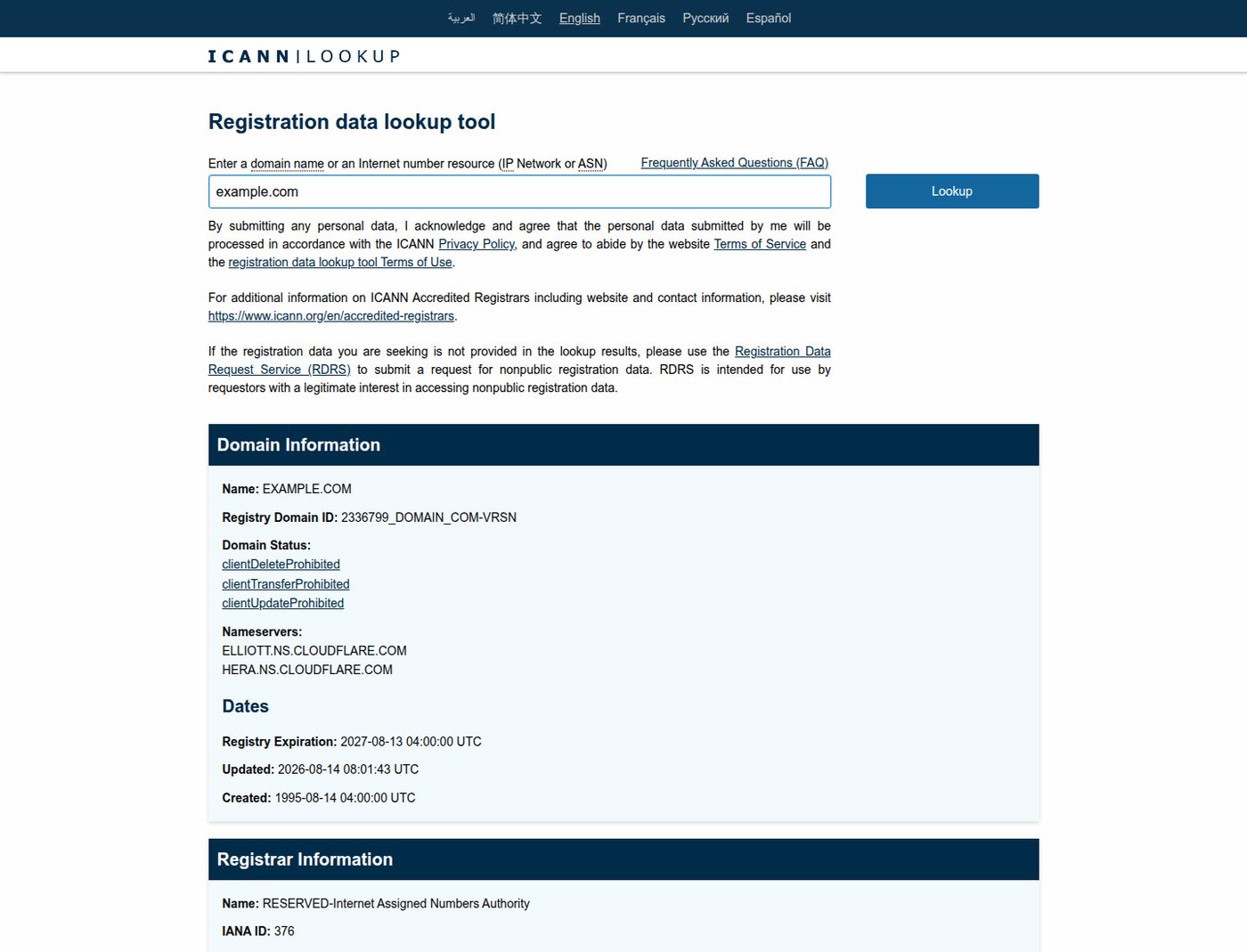
clientTransferProhibited is a lock status a buyer will notice. Confirm you can unlock and transfer before you promise a timeline. Source: lookup.icann.org.What Evidence Should a Listing Include?
Match evidence to the claim. For a brandable name, show spelling, extension, use cases, and comparable sales. For an aged domain, include a dated history review and a transparent backlink summary. Do not ask a buyer to trust a cropped metric screenshot.
Registrar, extension, expiration date, transfer status, and renewal terms.
Avoid: Publishing private account or authorization information.Verified date range, sources, countries, landing pages, and conversions where available.
Label clearly: Analytics data versus third-party estimates.Live relevant referring pages, anchors, destinations, and dates checked.
Do not promise: Permanent links, rankings, or authority transfer.Former topics, material risks, and a precise list of assets being transferred.
Do not imply: Ownership of former content or trademarks unless included.Date every export. Moz Domain Authority (DA) and Referring Domains (RD) can move between crawls. If you cannot give the buyer a way to repeat the check, treat the number as marketing, not evidence.
How Do You Choose a Sales Channel?
The channel should match how many informed buyers you actually expect, not how quickly you want a headline price.
- Buy now: Useful when the price is clear and convenience matters.
- Make offer: Preserves flexibility but can attract low-intent inquiries.
- Auction: Works when several informed bidders are likely. A weak auction can set an unexpectedly low comparable.
- Brokerage: Can help with high-value names that need buyer research and negotiation.
- Outbound: Requires relevant, lawful outreach. Do not use trademark pressure, spam, or misleading claims.
Marketplaces, brokers, and sell-side request forms have different fees, payout timing, and transfer methods. Read the live terms before you list. Compare auction mechanics separately in how domain auctions work.
How Should You Set a Defensible Price?
Use the domain-valuation framework for a floor, target, and walk-away number. Consider comparable sales, name quality, extension, buyer pool, verified traffic, usable links, renewal costs, commissions, holding time, and legal risk.
Do not price by multiplying DR, referring domains, or estimated traffic by a fixed amount. Those figures are not sale prices and can change between tools. A name with a poor topic fit or unresolved trademark risk is not worth the same as a clean comparable with the same score.
How Do You Write an Accurate Listing?
- Lead with the exact domain and the type of buyer it may suit.
- State the registrar, extension, renewal information, and transfer process.
- Date every metric and name the provider.
- Separate verified traffic from estimates.
- Describe historical use and material red flags honestly.
- State what is and is not included.
- Avoid “guaranteed rankings,” “penalty-free,” “instant authority,” and similar claims you cannot substantiate.
If the name is an expired domain that was rebuilt, say so. Buyers will check archives. An omitted parking, spam, or redirect period is more damaging in diligence than a disclosed one.
What Terms Matter Besides the Price?
Agree currency, payment method, marketplace or escrow fees, taxes, installments, inspection period, transfer deadline, and who bears the risk if the deal cannot complete. Keep a written record of changes.
Know the walk-away price before you negotiate. Silence, time pressure, and an unverified claim of another buyer are not evidence that you should change it. For payment sequencing, use the escrow and safe-transaction guide rather than wiring against a screenshot.
How Do You Complete Payment and Transfer Safely?
- Use a reputable marketplace checkout or escrow arrangement appropriate to the amount.
- Verify payment status inside the provider—not through an emailed screenshot.
- Do not disclose an authorization code until the agreed process says it is safe.
- Follow the registrar’s push or transfer steps and keep confirmation records.
- Release funds or confirm completion only when control has moved as agreed.
ICANN’s Transfer Policy sets baseline rules for transfers between registrars for many gTLDs. Country-code domains and individual registrars add their own steps. Consult both registrars, not only the policy page.
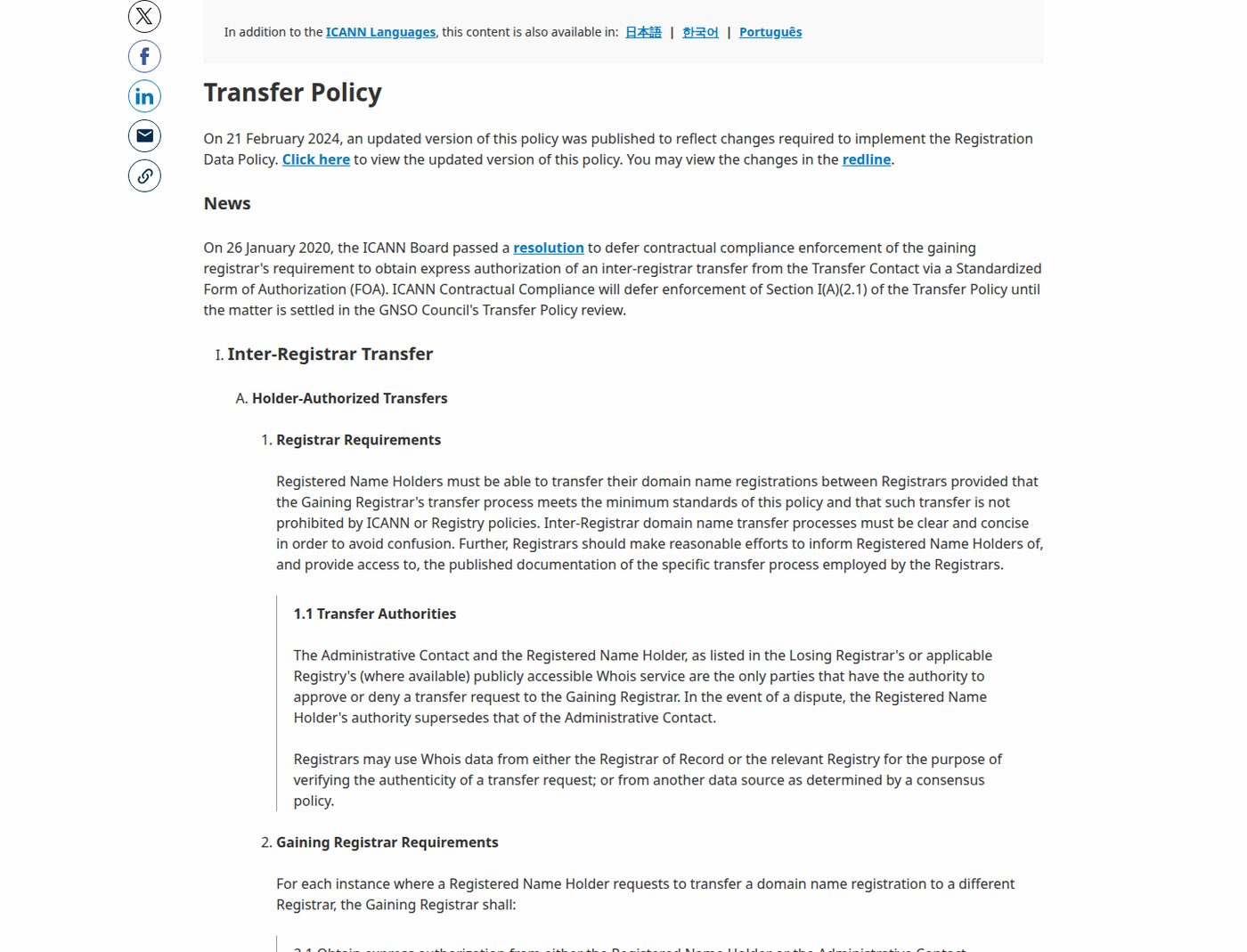
A same-registrar account push can be faster than an inter-registrar transfer, but it still changes control. Do not treat “the name left my account” as settlement until payment status inside escrow or the marketplace matches the contract.
When Should You Delay a Listing?
Do not list until you can complete the deal you are advertising. A buyer who cannot receive the name on the stated timeline, or who discovers an undisclosed lock, will treat that as a credibility problem—not a paperwork delay.
- The name is inside a 60-day window after registration, a prior inter-registrar transfer, or a change of registrant that you did not plan around.
- RDAP shows a hold, dispute, or expiry state you cannot clear quickly.
- Traffic or backlink claims depend on access you no longer have, or on a property you will not include.
- History, trademarks, or former content rights are unresolved and would surprise a reasonable buyer.
- You cannot identify who can approve the transfer in the registrar account.
Delaying a listing is cheaper than cancelling a funded escrow or explaining a failed Auth-Code after the buyer has already paid.
What Should You Do After the Sale?
- Remove the domain from auto-renewal, portfolio monitoring, DNS providers, and connected services only after completion.
- Deliver the assets named in the agreement and nothing that contains unrelated customer or personal data.
- Save the invoice, agreement, transfer confirmation, fees, and tax records.
- Stop using email, certificates, analytics, or accounts attached to the sold name.