


What Is the Difference Between Expired and Dropped Domains?
An expired domain is a name whose registration term ended. A dropped domain has completed deletion at the registry. A backorder is a service’s instruction to try to register that name if it is deleted. Mixing those states leads people to bid on names they cannot actually buy yet, or to treat a catch as a completed, risk-free purchase.
This is separate from the marketplace term aged domain, which describes history you can inspect. An aged domain may never have expired. An expired or dropped name may have little useful history left. The expired-domains guide covers what can survive expiration; this page covers how the name becomes available—or fails to.
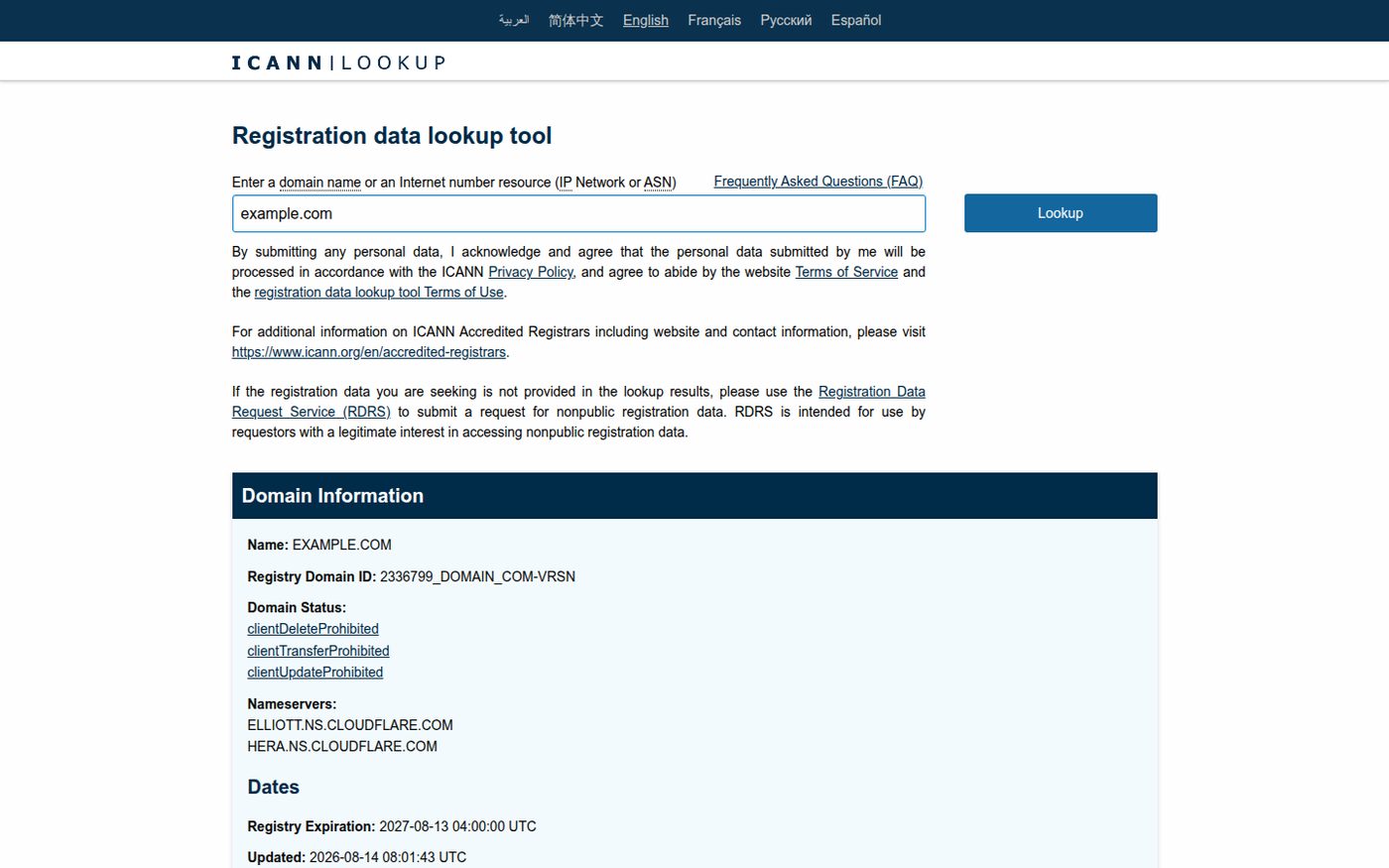
redemptionPeriod or pendingDelete.How Does the Typical gTLD Lifecycle Work?
For many generic top-level domains such as .com, ICANN documents a sequence after expiration. Timing and auction practice still vary by registrar, registry, and extension. Country-code domains often follow different rules. Treat the stages as a map, not a calendar you can bet on.
The registration term ended. The former registrant may still be able to renew under registrar terms.
Buyer position: Not ordinarily available to hand-register.The registrar may renew, park, auction, or suspend the name. ICANN notes that a registrar may make an expired name available to third parties during an auto-renew grace period.
Buyer position: An expiry auction may exist, but delivery can still be cancelled if the registrant renews.For many gTLDs the registry holds a redemption grace period during which the former registrant can restore the name, usually for an extra fee. Normal resolution is typically disabled.
Buyer position: Not available for ordinary registration.Deletion is scheduled. Restoration is generally no longer available for applicable gTLDs.
Buyer position: Backorder services prepare to attempt a catch after release.The registry deletes the name. Registrars compete to create a new registration.
Buyer position: A successful service may allocate it under its own rules.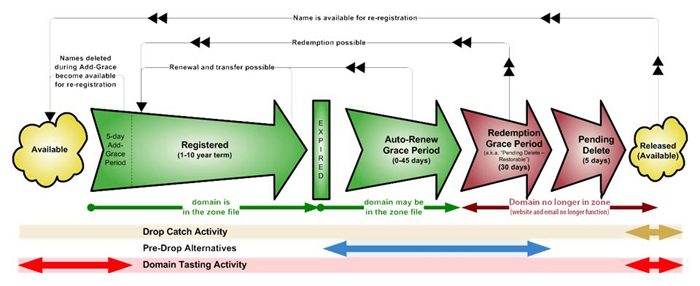
See ICANN’s gTLD lifecycle and Expired Registration Recovery Policy for the policy layer, then verify the registrar and registry rules for the exact name.
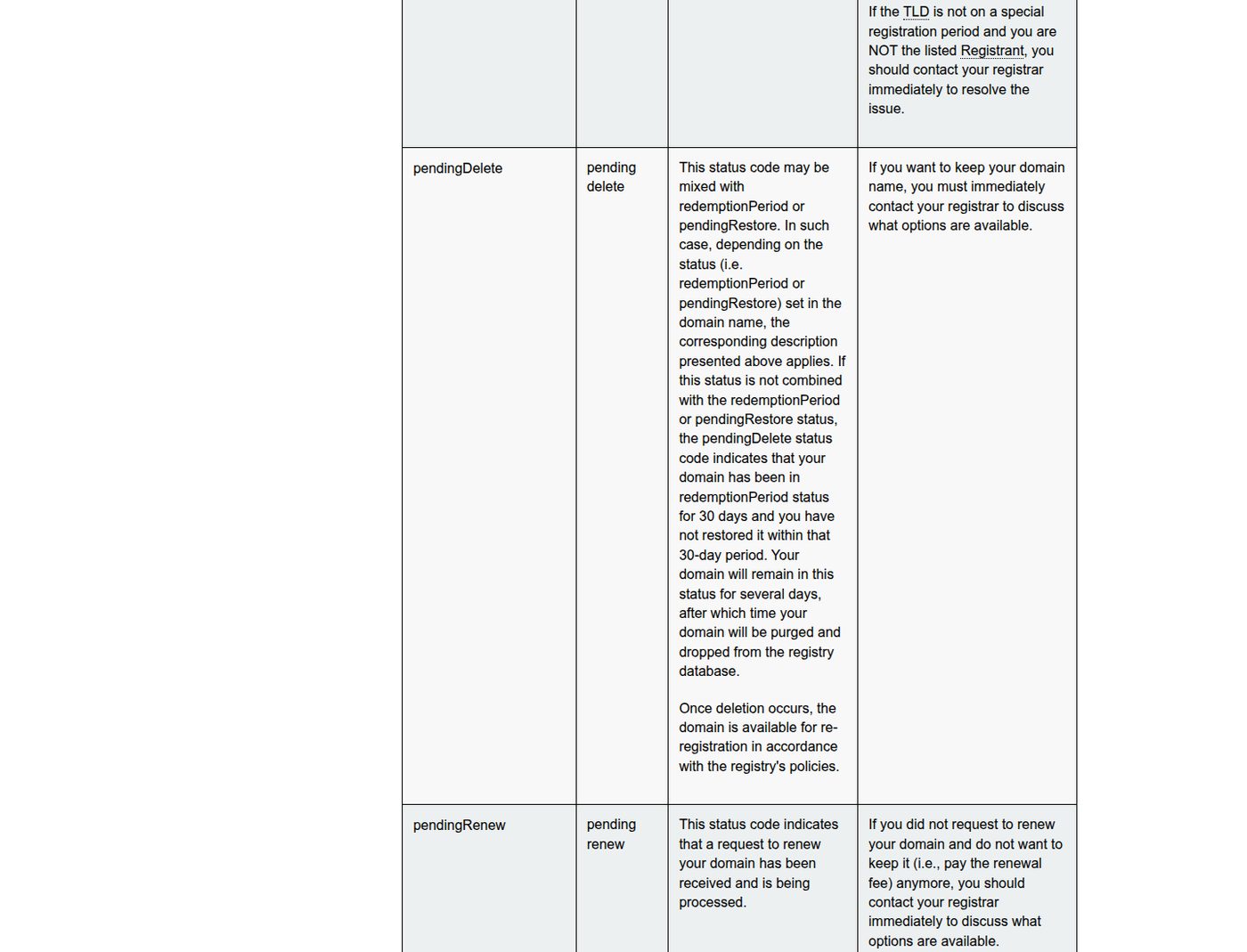
pendingDelete (17 Aug 2026). That code is the registry state after an unrestored redemption period—not a marketplace “pending delete” filter. Source: icann.org.Does a Backorder Reserve the Domain?
No. A backorder tells a provider you want it to attempt registration if the domain drops. It is not a reservation at the registry, not a lock against other buyers, and not a promise that the name will delete at all.
Providers use the word differently. One “backorder” may mean an expiry-auction bid, another a post-deletion catch attempt, another only a monitoring alert. Read the current product definition, fee timing, refund rule, supported extensions, and what happens when several customers ordered the same name.
- Some fees are charged up front whether or not the catch succeeds.
- Some fees are charged only after a successful registration.
- Some successful catches still go to a private auction among that provider’s customers.
- A competing registrar network can still register the name first.
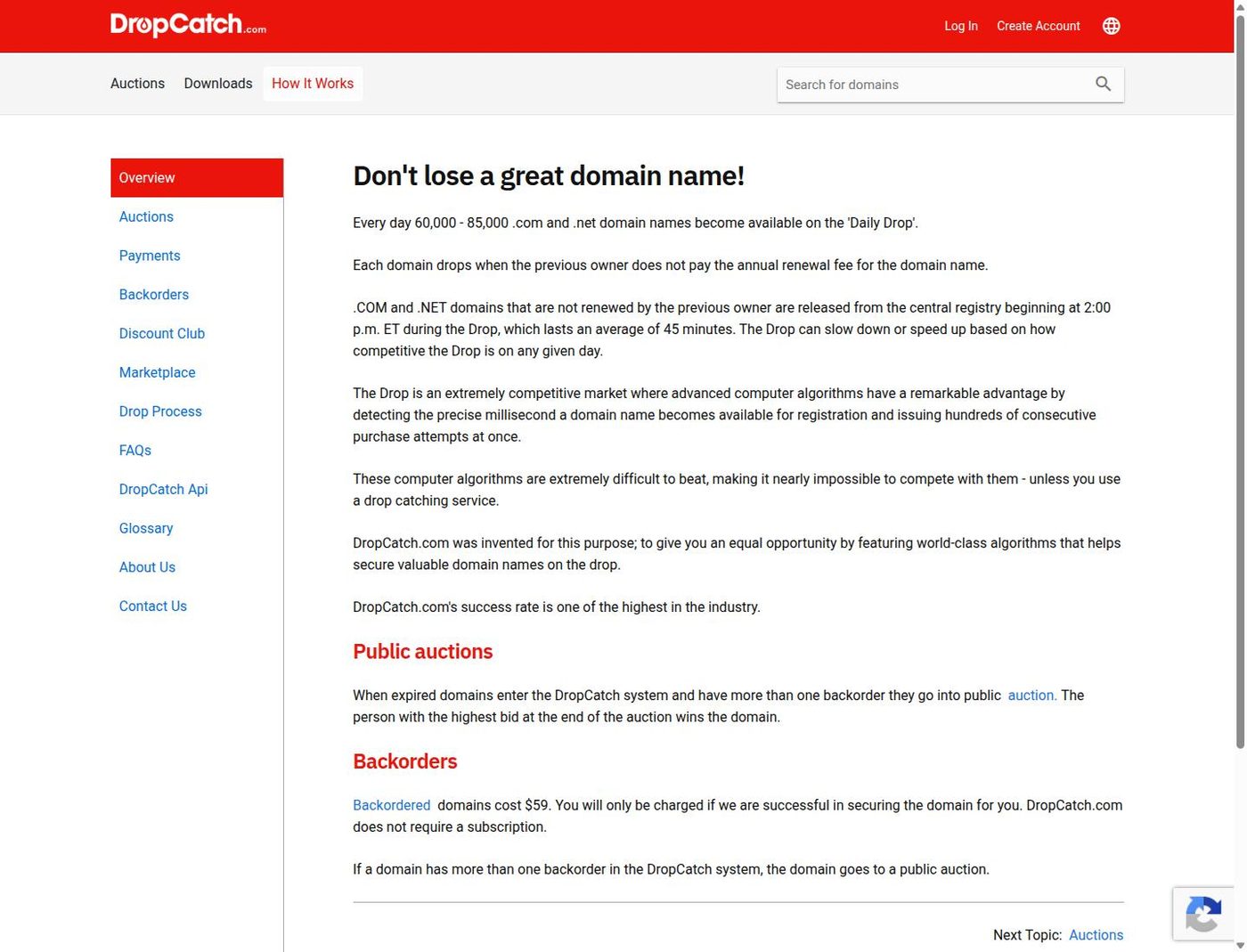
How Does Drop Catching Work?
- You identify a name you believe is approaching deletion and confirm its live status.
- One or more providers accept an instruction under their current terms.
- If the registry deletes the name, participating registrars send registration attempts immediately.
- If your provider registers it for a single customer, that customer may receive it at the stated price.
- If several of that provider’s customers requested it, a private auction or other allocation rule may apply.
- If another service registers it first, your provider cannot deliver the domain.
Valuable names are often registered within seconds by automated systems. “Available after the drop” rarely means a person will find it free through a manual registrar search. Provider infrastructure, registrar access, and supported TLDs change; do not rely on an old comparison list.
How Should You Read Backorder Fees?
Compare the all-in cost of a catch, not the advertised backorder price alone:
- Application or membership fees that are due whether or not the name drops
- Success fees, buyer premiums, and private-auction increments
- First-year registration, premium renewals, and transfer-out charges
- Currency conversion, taxes, and non-refundable monitoring products
A cheap failed backorder can still be expensive if you duplicate it across several providers without reading refund terms. A “won” catch can cost more than a fixed-price marketplace name once auction bids and renewals are included. Set the ceiling before the service emails you that an auction has started.
How Is a Backorder Different From an Expiry Auction or a Marketplace Purchase?
The registrar or a partner offers the name before registry deletion.
Delivery risk: The former registrant may still renew during an applicable period. See how domain auctions work.A service attempts a new registration after deletion.
Delivery risk: Catch competition, private auctions, unsupported extensions, and names that never drop.A current owner already controls the registration.
Delivery risk: Transfer, locks, and seller performance—not a race at the registry. Compare channels in where to buy expired and aged domains.These routes have different due-diligence windows. A marketplace listing can often be investigated for days. A pending-delete catch may leave hours. That compressed window is a reason to finish history and legal checks before placing the order, not after a “win” notification.
What Can Go Wrong After You Appear to Win?
- The name never dropped: The registrant renewed, restored it from redemption, or the registrar kept it.
- Another network caught it: Your provider’s attempt failed; prepaid fees may or may not be refundable.
- A private auction starts: The catch succeeded for the provider, but several of its customers wanted the same name.
- The extension was unsupported: Some ccTLDs and specialty registries cannot be caught through a given service.
- Metrics move: Domain Rating (DR), Referring Domains (RD), and similar scores can change when URLs break, links are removed, or tools recrawl after deletion.
- History was never inspected: A successful catch is not evidence of a clean archive, live citations, or a lawful new use.
Google’s spam policies still apply after a drop. Buying a deleted name and filling it with low-value content primarily to manipulate rankings can constitute expired domain abuse. Catching a name does not create an exception.
What Should You Verify Before Ordering or Bidding?
A countdown is not a reason to skip review. Before committing meaningful money:
- Confirm live status, registrar, and TLD rules through ICANN Lookup or the registry.
- Review several years of archives and historically linked URLs with the domain-history workflow.
- Inspect live sources, anchors, and destinations—not only a third-party score.
- Screen trademarks, former brands, and impersonation risk.
- Read the provider’s current fees, refunds, allocation rules, and supported extensions.
- Set a maximum all-in price before any private auction begins.
- Assume links and estimated traffic can decay after the site goes dark.
The domain-vetting workflow and buying checklist cover evidence and transaction sequencing. Use them even when the only “inventory” is a backorder ticket.
What Mistakes Should You Avoid?
- Assuming every expired domain reaches pending delete
- Believing a backorder reserves the name at the registry
- Placing duplicate orders without understanding each provider’s fees
- Entering a private auction without a valuation ceiling
- Treating a successful catch as proof of domain quality
- Relying on exact drop timing from a generic lifecycle diagram
- Skipping legal and history checks because the window is short
Primary Sources
- ICANN: Lifecycle of a typical gTLD domain name
- ICANN: Expired Registration Recovery Policy
- ICANN: Domain renewal and expiration FAQs
- ICANN Lookup
- Google Search Central: Spam policies — expired domain abuse